Best Composite Siding Maintenance Plans: Complete Lifecycle Preservation Strategy
Preserving multi-decade performance across modern building envelopes requires structured operational oversight, calibrated cleaning practices, and systematic physical inspections. Engineered composite cladding systems provide exceptional defense against environmental decay when compared with natural timber. However, low-maintenance properties should not be confused with zero-maintenance promises. Best Composite Siding Maintenance Plans. Accumulated atmospheric particulates, micro-fungal spores, trapped joint moisture, and subtle foundation settling gradually compromise facade integrity if left unmonitored.
Managing composite wall assemblies over forty-year operational horizons involves analyzing material physics, regional environmental stressors, and subframe attachment mechanics. Capped wood-plastic matrices, mineral-filled polymers, poly-ash formulations, and bio-based composites react distinctly to local thermal shifts, rain chemistry, and ultraviolet exposure. Neglecting basic maintenance schedules creates hidden risks, including capstock abrasion, weep vent blockage, sealant joint cracking, and internal framing decay.
Optimizing building lifecycle value demands structured maintenance protocols that balance visual upkeep with functional structural protection. Facility managers, property owners, structural engineers, and building envelope consultants must establish systematic inspection regimes tailored to specific material chemistries and micro-climates. This comprehensive guide analyzes technical maintenance frameworks, risk mitigation protocols, resource allocation dynamics, and long-term envelope preservation practices.
Best Composite Siding Maintenance Plans
Developing the best composite siding maintenance plans requires evaluating building envelope management through a proactive lifecycle framework rather than reacting strictly to visible surface defects. Property managers can maximize cladding durability while minimizing operational expenses by combining low-pressure washing protocols, elastomeric sealant joint checks, fastener torque audits, and rainscreen drainage clearings.
Multi-Disciplinary Operational Scope
Maintaining architectural cladding spans several professional disciplines across a building’s service life. Building science specialists analyze hygrothermal performance, cavity air drying potential, and relative humidity trends inside unvented wall assemblies. Structural engineers evaluate fastener shear performance, thermal expansion strain, and wind uplift resistance across framing connections.
Facility management teams execute scheduled surface cleaning routines, inspect flashing penetrations, and verify bottom drainage clearances. Financial analysts compute life-cycle cost distributions, balancing routine preventative maintenance against expensive capital remediation events.
Rainscreen Aerodynamics and Cavity Maintenance
Advanced facade assemblies rely on rear-ventilated rainscreen mechanics to protect primary wall sheathing from trapped liquid water. The exterior composite cladding deflects bulk rain, while a vertical cavity equalizes air pressure and drains intruding water downward toward base flashing exits.
Continuous convective airflow inside rear cavity spaces evaporates trapped moisture vapor before fungal spores germinate. Maintaining unobstructed weep vents along wall bases ensures continuous stack ventilation. This simple preventative measure preserves structural sheathing, protects internal framing studs, and extends panel service lifespans.
Common Misunderstandings and Oversimplification Risks
A widespread mistake in property management involves using high-pressure power washers to remove accumulated surface dirt quickly. Extreme water pressure strips protective capstock coatings, cuts elastomeric caulk joints, and forces water deep into behind-siding cavity spaces, causing internal wood rot.
Another frequent error involves ignoring minor sealant failures around window frames and wall penetrations. Small gaps in perimeter sealants admit wind-driven rain, bypass primary water barriers, and compromise internal framing stability long before exterior surface defects become visible.
Deep Contextual Background
Historical Evolution of Facade Maintenance Protocols
Traditional timber lap siding required intensive physical maintenance every five to seven years to preserve wood fibers from environmental rot. Facility owners faced continuous scraping, sanding, priming, and painting cycles to keep moisture out of porous wood grains.
Early synthetic composite boards introduced in the late twentieth century claimed total immunity to atmospheric degradation. However, un-capped first-generation composites absorbed water along field-cut edges, causing board swelling, structural sagging, and fastener pull-out. Modern building science addresses these historical flaws using co-extruded capstocks, poly-ash matrices, and structured maintenance schedules that protect capital investments.
Modern Engineering and Lifecycle Optimization
Contemporary building envelope design treats exterior cladding as an adaptable outer deflector within an integrated weather protection assembly. Modern building codes mandate continuous moisture drainage, air barrier integration, and strict ventilation performance to preserve structural framing.
High-performance composite formulations offer smooth, low-porosity surfaces that resist spore anchoring and dirt accumulation. Implementing structured operational protocols when facility teams evaluate the best composite siding maintenance plans preserves building aesthetics, maintains structural safety, and optimizes real estate asset value.
Conceptual Frameworks and Mental Models Best Composite Siding Maintenance Plans
Optimizing long-term facade maintenance requires using structured analytical models to guide operational scheduling, tool selection, and risk management.
1. The Maintenance Depth Hierarchy
This framework organizes facade care into three distinct operational tiers based on technical complexity and risk mitigation.
-
Surface Maintenance: Low-pressure washing, neutral detergent cleaning, and organic dirt removal across panel faces.
-
Interface Maintenance: Inspecting elastomeric caulk joints, window flashing overlaps, and expansion gap tolerances.
-
Subframe Maintenance: Auditing hidden fastener torque, clearing bottom rainscreen weep vents, and checking structural sheathing dryness.
Model Limitation: Focuses primarily on exterior physical components while omitting internal indoor environmental quality monitoring.
2. The Micro-Climate Stress Matrix
This model categorizes maintenance intensity by mapping local environmental exposure levels against material chemistry.
-
High Moisture / High UV: Coastal tropical exposures require semi-annual biocide washes and annual caulk joint audits.
-
Moderate Moisture / High Freeze-Thaw: Alpine environments require spring meltwater inspections and pre-winter fastener expansion gap checks.
-
Low Moisture / High UV: Arid desert regions demand annual surface dust removal and UV-degradation sealant checks.
Model Limitation: Assumes baseline building construction complied fully with initial manufacturer installation tolerances.
3. The Preventative Cost Decay Model
This model projects total operational expenditure curves across variable maintenance response times.
-
Proactive Annual Routine: Low annual expenditure yields forty-plus years of stable facade performance.
-
Deferred Five-Year Cycle: Moderate periodic repair costs are incurred to address localized sealant failures and board swelling.
-
Reactive Twenty-Year Overhaul: Neglecting routine care leads to catastrophic framing rot, requiring complete cladding removal and high capital expenditure.
Model Limitation: Does not account for sudden material damage caused by extreme weather events or falling trees.
Key Categories and Maintenance Variations Best Composite Siding Maintenance Plans
Technical Comparison Matrix
| Composite Material System | Cleaning Frequency | Primary Maintenance Focus | Chemical Sensitivity | Lifecycle Care Intensity |
| Co-Extruded WPC | Annual | Capstock Protection & Gap Clearing | Avoid Abrasives / Solvents | Low |
| Poly-Ash Architectural Board | Bi-Annual | Paint Film & Joint Caulk Integrity | Highly Tolerant | Very Low |
| Mineral-Filled Polymer | Annual | Surface Dust & Weep Slot Audit | Highly Tolerant | Lowest |
| Uncapped Wood-Composite | Semi-Annual | Edge Seal Paint & Mold Suppression | Sensitive to Bleach | Moderate-High |
| Rice Husk Bio-Composite | Annual | Surface Rinse & Clip Alignment | Moderate | Low |
| Glass-Reinforced Matrix | Bi-Annual | Surface Wash & Fastener Torque | Highly Tolerant | Lowest |
Co-Extruded Wood-Plastic Composites (WPC)
Co-extruded WPC materials combine recycled polyethylene resins and fine wood flour wrapped in a protective acrylic capstock. The acrylic shell creates a smooth barrier that prevents water, oil, and fungal hyphae from entering core fibers.
The structural component sequence follows a clear order: Structural Framing, Sheathing, Water Barrier, Furring Channels, and Capped WPC Boards.
Maintenance focuses on gentle washing using neutral soaps to remove organic pollen and clearing debris from horizontal expansion joints. High-pressure washing must be avoided to prevent capstock damage.
Poly-Ash Architectural Boards
Poly-ash boards blend inorganic fly ash with cross-linked polyurethane polymers to create dense cladding panels. This non-porous material contains zero wood flour, making it completely inert to fungal decay.
Poly-ash boards accept high-performance exterior acrylic paints readily. Maintenance schedules prioritize inspecting paint film adhesion and replacing aged elastomeric caulking at board intersections every seven to ten years.
Mineral-Filled Polymer Panels
Mineral-filled composite panels incorporate ground limestone or silica minerals into dense polymer compounds. The inorganic mineral fill provides non-combustible fire resistance and high physical impact toughness.
Maintenance demands remain minimal, requiring only periodic low-pressure water rinses to remove airborne dust. Weep slots along base flashing must be audited annually to preserve cavity ventilation.
Uncapped Wood-Composite Boards
Uncapped composite panels blend wood fibers and synthetic binders without adding an outer protective capstock layer. Uncapped panels carry higher maintenance risks due to ambient moisture absorption.
Exposed wood fibers require repainting or clear-sealing every five to eight years to prevent edge swelling. Neglecting cut-edge sealing leads to deep fungal penetration, surface staining, and board rot.
Rice Husk Bio-Composite Panels
Bio-composites utilize agricultural rice husk waste bound with synthetic polymers to form stable exterior siding boards. Natural silica contained in rice husks provides water resistance and deters pest infestations.
Maintenance protocols focus on annual soft-brush washing and verifying sliding hidden clip alignment to ensure smooth thermal expansion movement.
Glass-Reinforced Composite Matrices
Glass-reinforced polymer cladding embeds continuous glass fibers inside thermosetting resin matrices. Glass reinforcement provides exceptional tensile strength, zero water absorption, and high impact resistance.
High manufacturing costs are offset by negligible operational maintenance needs. Care involves periodic water washing and visual audits of structural subframe anchors every five years.
Realistic Decision Logic for System Selection
Establishing an effective maintenance routine requires evaluating local weather exposure, building height, trade availability, and operating budgets. Shaded northern elevations near dense forest canopies require annual biodegradable biocide washes to neutralize airborne fungal spores before colonies establish.
High-wind coastal properties require bi-annual fastener torque checks and salt residue rinses using low-pressure fresh water. When facility directors evaluate the best composite siding maintenance plans, matching material chemistry with appropriate cleaning tools prevents premature envelope failure.
Detailed Real-World Scenarios Best Composite Siding Maintenance Plans
Scenario 1: Coastal Multi-Family Complex
A four-story oceanfront residential complex in North Carolina faces constant salt spray, high humidity, and hurricane-force wind uplift.
The maintenance management sequence follows a strict order: High Salt Exposure, Low-Pressure Rinse, Fastener Inspection, Caulk Audit, and Weep Slot Clearing.
-
Primary Constraint: Salt crust accumulation degrades metal hardware, while wind-driven rain tests sealant joints.
-
Selected Strategy: Semi-annual fresh water rinses, annual 316-grade stainless steel fastener audits, and bi-annual caulk joint replacements.
-
Failure Modes: Maintenance team uses high-pressure power washing, stripping capstocks and forcing salt water into cavity spaces.
-
Second-Order Effects: Low-pressure rinsing removes salt deposits safely, preserving hardware integrity and extending cladding lifespan beyond forty years.
Scenario 2: Alpine Commercial Lodge
A mountain resort in Colorado experiences severe freeze-thaw cycles, deep winter snowpack accumulation, and intense spring meltwater runoff.
-
Primary Constraint: Heavy snowpack rests against lower wall sections, creating meltwater pressure along base flashing.
-
Selected Strategy: Pre-winter expansion gap clearings, post-winter snow clearance from wall bases, and annual spring moisture audits.
-
Failure Modes: Snow removal crews bank snow directly against siding, blocking weep slots and trapping meltwater inside wall cavities.
-
Second-Order Effects: Elevating snow clearance zones keeps base weep vents open, facilitating rapid cavity drying during spring thaws.
Scenario 3: Suburban Corporate Campus
A three-story office building in Georgia features capped WPC siding installed over rear-ventilated furring channels beneath mature pine trees.
The surface cleaning workflow operates systematically: Pollen Accumulation, Neutral Detergent Spray, Soft Brush Scrub, Low-Pressure Rinse, and Weep Clearance.
-
Primary Constraint: Heavy spring pine pollen deposits accumulate on panel surfaces, feeding dark mold spores.
-
Selected Strategy: Annual late-spring cleaning using biodegradable biocide soap and soft-bristle architectural wash brushes.
-
Failure Modes: Facilities staff neglects annual washing, allowing pollen beds to turn into dark fungal blooms that stain acrylic capstocks.
-
Second-Order Effects: Scheduled spring washing removes pollen beds, keeping panel faces bright without using harsh chemical bleaches.
Scenario 4: Urban Medical Center Retrofit
A healthcare facility in Illinois features mineral-filled polymer panels installed over metal furring channels along busy urban streets.
-
Primary Constraint: Urban smog and diesel exhaust deposit oily soot particles on exterior building walls.
-
Selected Strategy: Bi-annual low-pressure washing using citrus-based degreasers and annual subframe anchor visual checks.
-
Failure Modes: Maintenance crews scrub panels with stiff wire brushes, scratching outer mineral caps and trapping street grime in scratches.
-
Second-Order Effects: Citrus-based degreasers dissolve soot safely, preserving smooth surface finishes and maintaining professional aesthetics.
Planning, Cost, and Resource Dynamics
Budgeting composite siding maintenance requires calculating direct cleaning supplies, labor hours, scaffolding rentals, and emergency reserve funds. Allocating modest operational funds for annual preventative care eliminates catastrophic capital expenditure events caused by neglected water intrusion.
Maintenance Operational Budgeting Matrix
| Maintenance Component | Annual Cost (/sqft)∣10−YearCumulative(/sq ft) | Deferred Neglect Risk ($/sq ft) |
| Low-Pressure Surface Wash | $0.15 – $0.35 | $1.50 – $3.50 |
| Caulk & Sealant Touch-Up | $0.10 – $0.25 | $1.00 – $2.50 |
| Weep Vent & Cavity Clearance | $0.05 – $0.15 | $0.50 – $1.50 |
| Fastener & Clip Audits | $0.08 – $0.20 | $0.80 – $2.00 |
| Total Program Investment | $0.38 – $0.95 | $3.80 – $9.50 |
Direct and Indirect Financial Drivers
Direct costs include neutral cleaning detergents, biodegradable biocides, elastomeric caulk cartridges, replacement fasteners, and soft wash brushes. Indirect expenses include lift equipment rentals, safety rigging, site access permits, and third-party envelope inspection fees.
Investing in systematic annual maintenance requires minor operational outlays. However, this small investment prevents premature structural sheathing rot and avoids expensive facade tear-offs over thirty-year operational windows.
Supply Chain, Material Storage, and Tool Care
Maintaining matching replacement inventory requires ordering extra cladding boards during initial building construction. Storing extra boards flat on raised pallets in climate-controlled spaces ensures matching dye-lots remain available for localized repairs.
Proper tool care ensures maintenance operations execute safely without damaging siding faces. Soft-bristle brushes, low-pressure spray nozzles, and safety harnesses must be inspected before each cleaning campaign.
Tools, Strategies, and Support Systems
Executing effective composite siding maintenance requires specialized soft-wash pumps, telescopic poles, neutral detergents, and inspection cameras.
The maintenance execution workflow moves sequentially: Safety Rigging Setup, Visual Inspection, Detergent Application, Soft Brush Wash, and Final Low-Pressure Rinse.
Low-Pressure Soft-Wash Pump Systems
Utilizing dedicated low-pressure electric diaphragm pumps delivers detergent solutions at pressures below one hundred pounds per square inch. Low operating pressure prevents capstock damage while applying uniform cleaning coverage.
Telescopic Architectural Wash Poles
Telescopic fiberglass poles fitted with soft flag-tipped synthetic brushes allow technicians to clean upper wall sections safely from ground level. Soft bristles loosen surface dirt without scratching pre-finished panel caps.
Biodegradable Biocide Cleaners
Specialized biodegradable cleaning solutions containing zinc salts or quaternary ammonium compounds neutralize fungal spores safely. Biocide solutions eliminate micro-fungal growth without harming surrounding landscape vegetation or corroding metal flashings.
Risk Landscape and Failure Modes Best Composite Siding Maintenance Plans
Substrate Framing Decay from Blocked Weep Slots
Base weep slots covered by garden mulch, soil, or windblown leaves prevent water from draining out of rainscreen cavities. Trapped moisture rises inside wall cavities, causing extensive mold growth and fungal rot across structural OSB sheathing.
Keeping landscape beds three inches below cladding base edges preserves open drainage. Weep openings must remain clear to facilitate continuous air movement.
Capstock Abrasion and Core Water Saturation
Scouring composite boards with wire brushes, abrasive pads, or high-pressure power washers strips protective acrylic capstocks. Exposed inner wood fibers absorb standing water, causing localized swelling, freeze-thaw cracking, and fastener pull-out.
Using neutral-pH soap solutions and soft brushes preserves capstock integrity. The degradation cycle moves sequentially: Surface Abrasion, Capstock Fracture, Water Entry, and Core Swelling.
Sealant Joint Failure and Cavity Water Entry
Cracked or shrinking elastomeric caulk around window frames allows wind-driven rain to enter wall cavities. Moisture trapped behind cladding fosters rapid mold growth along timber framing studs.
Inspecting caulk joints annually and replacing aged sealant maintains weather-tight envelope seals. High-grade polyurethane or silicone sealants offer long-lasting joint protection.
Governance, Maintenance, and Long-Term Adaptation
Preserving composite siding performance requires structured governance protocols, detailed digital logging, and clear review schedules. The governance workflow covers four steps: Visual Inspection, Clear Weep Vents, Check Caulk Joints, and Low-Pressure Wash.
Low-Pressure Washing Guidelines
Composite siding requires annual surface washing to remove dust, pollen, and airborne organic deposits before mold spores establish. High-pressure power washing must be avoided, as extreme water pressure forces liquid water past internal rainscreen baffles.
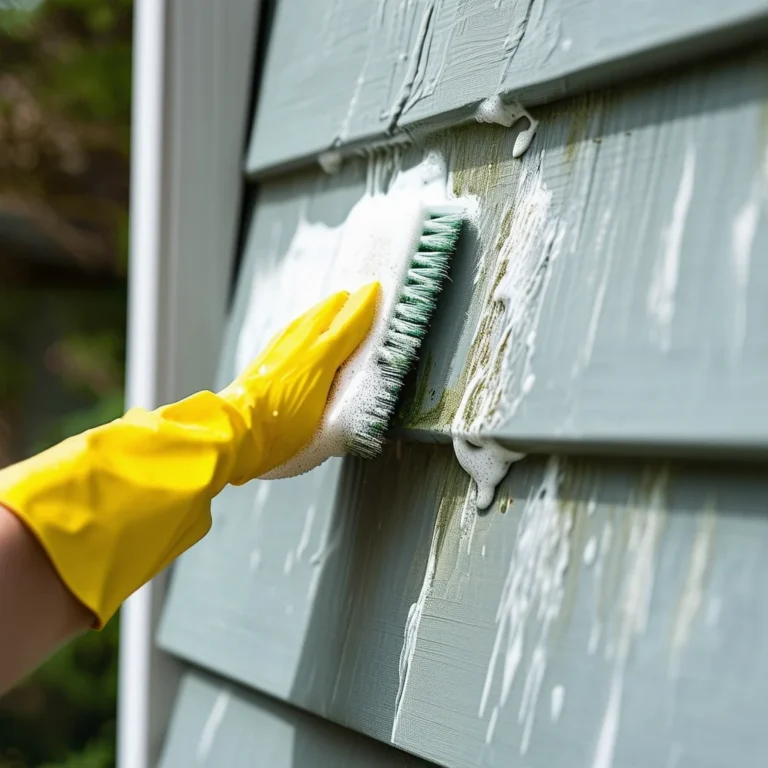
Low-pressure water sprays combined with mild neutral-pH detergents remove surface dirt safely. Abrasive brushes should never be used on pre-finished composite surfaces.
Layered Maintenance Audit Schedule
-
Semi-Annual: Clear leaves, soil, and organic debris from lower rainscreen weep vents and drainage slots.
-
Annual: Inspect elastomeric sealant joints around window frames, door openings, and wall penetrations for cracking.
-
Bi-Annual: Apply a preventative biodegradable biocide wash to shaded northern elevations to prevent spore settlement.
-
Five-Year Audit: Perform a comprehensive third-party building envelope audit, checking fastener torque and hidden sheathing moisture levels.
Measurement, Tracking, and Evaluation
Evaluating envelope health involves tracking leading operational indicators alongside lagging structural performance signals across the building service life.
Facade Health Performance Metrics
| Leading Indicators | Lagging Indicators |
| Cavity relative humidity tracking | Visible surface mold spots |
| Surface dirt and pollen accumulation checks | Interior drywall water stains |
| Base weep vent clearance audits | Structural stud framing decay |
Quantitative and Qualitative Evaluation Methods
Quantitative audits use electronic pinless moisture meters to measure panel water content and cavity humidity sensors to log relative moisture levels inside wall assemblies.
Qualitative inspections check surface cleanliness, reveal line alignment, and inspect shadow lines for signs of sealant cracking or panel bowing.
Common Misconceptions and Oversimplifications Best Composite Siding Maintenance Plans
Myth 1: Composite Siding Needs Zero Maintenance Over Its Lifespan
Correction: Composite siding requires lower maintenance than painted wood, but annual cleaning and sealant inspections remain essential to prevent failure.
Myth 2: Power Washing Is the Fastest Safe Cleaning Method
Correction: High-pressure water strips surface capstocks and forces water behind cladding into wall cavities. Low-pressure washing with soft brushes is essential.
Myth 3: Bleach Is the Best Cleaner for Composite Siding
Correction: Chlorine bleach damages acrylic capstocks and harms surrounding landscape plants. Biodegradable biocide cleaners eliminate mold safely without harming surfaces.
Myth 4: Rainscreen Air Gaps Are Unnecessary in Dry Climates
Correction: Ambient condensation occurs in all climates when warm air hits cool wall surfaces. Ventilation gaps drain condensation and prevent hidden cavity rot.
Ethical, Practical, and Contextual Considerations
Specifying durable composite cladding systems offers environmental benefits when utilizing recycled plastic polymers and reclaimed wood fibers. Using recycled raw materials diverts industrial waste from landfills while reducing raw timber harvesting.
Designing durable building envelopes extends structural service life, lowering total resource consumption over multi-decade timeframes. Long-lasting wall assemblies prevent premature building demolition and reduce renovation construction waste. Establishing the best composite siding maintenance plans supports sustainable construction by preserving building structural integrity and indoor environmental quality.
Conclusion
Maximizing composite siding performance requires balancing material science, structural engineering, field craft, and ongoing moisture management. Exterior wall assemblies must perform as integrated protection systems that accommodate thermal movement, manage airflow, and drain liquid water efficiently.
Achieving long-term envelope performance requires prioritizing full rainscreen assembly engineering over simple surface appearance. Specifying non-porous capstocks, enforcing nail depth controls, maintaining ventilated drainage cavities, and executing gentle annual washing routines protects property investments. Correct structural siding management delivers lasting architectural aesthetics, low operational expenses, and complete framing protection across multi-decade service lifespans.