Best Composite Siding Textures United States Structural Surface Guide
Evaluating exterior building envelopes requires analyzing material durability, moisture management, and surface texture physics. The visual character of a residential facade depends heavily on surface relief depth, shadow line definition, and light reflectivity. Best Composite Siding Textures United States . Selecting composite cladding textures involves understanding how surface finishes interact with ambient solar radiation, atmospheric dust accumulation, and local environmental exposure. Choosing a texture based only on sample swatches often causes unexpected maintenance burdens, uneven dirt staining, and architectural mismatched facades across building elevations.
The American residential construction industry uses engineered composite materials to replicate natural timber, hand-hewn stone, and smooth artisan stucco surfaces. Modern fiber cement, poly-ash, cellular PVC, and engineered wood substrates allow precise embossing and casting techniques. Deep cedar grain patterns create dramatic shadow lines that obscure minor board alignment variances, while smooth, sand-blasted textures deliver clean lines required for contemporary architectural styles. Surface texture choice directly impacts dirt release capabilities, paint film adhesion, and long-term weathering characteristics across regional climate zones.
Texture performance extends beyond aesthetic preference into functional building science. Deeply grooved surfaces trap wind-borne airborne particulate matter, organic sap, and moisture in humid environments, increasing biological mildew growth. Conversely, ultra-smooth composite finishes reflect high levels of solar radiation, exposing underlying substrate expansion mechanics and showing subtle surface flaws under direct sunlight. Architects, general contractors, and building managers must evaluate texture selections through an integrated approach that balances architectural intent with cleaning access and long-term surface durability.
This comprehensive technical analysis provides architects, exterior designers, residential builders, and property managers with an analytical decision framework. By examining manufacturing embossing methods, shadow dynamics, maintenance demands, paint adhesion metrics, and regional weathering profiles, building industry professionals can select optimal surface textures for any residential project.
Understanding Best Composite Siding Textures United States
Analyzing the best composite siding textures united states market offers requires evaluating how micro-surface relief interacts with regional weathering forces. Manufactured composite siding relies on mechanical embossing rollers or silicone casting molds that stamp grain patterns into wet cementitious slurries, heated cellular polymers, or resin-bound wood matrices. These manufacturing methods control groove depth, pattern repetition frequency, and micro-surface roughness across individual siding planks.
Building professionals evaluate cladding surface textures using four critical performance parameters:
-
Relief Depth Index: The vertical distance between the highest peak and lowest groove on an embossed board surface.
-
Pattern Repeat Radius: The longitudinal length a board profile runs before repeating the identical grain pattern sequence.
-
Micro-Porosity Rating: The microscopic surface voids present within the texture that retain liquid paint or trap atmospheric dust.
-
Specular Gloss Reflectance: The percentage of light reflected directly off the finished surface texture at standardized angles.
Focusing exclusively on interior showroom samples without checking outdoor light orientation causes architectural disappointment on finished project sites. Surface textures look drastically different under low-angle morning sunlight compared to diffuse indirect lighting on cloudy days. Selecting composite textures requires evaluating how local dust loads, solar orientation, and rain exposure affect surface appearance over time.
Manufacturing Embossing and Surface Casting Chemistry
Fiber cement board textures are formed using heavy steel rollers or pressurized silicone impression belts before steam curing. Poly-ash and cellular PVC materials undergo thermal extrusion, where cooled embossing wheels press natural wood grain patterns directly into hot polymer surfaces.
Light Reflectance, Shadow Lines, and Architectural Geometry
Deep grain textures break up harsh solar glare, casting micro-shadows that conceal minor panel installation inconsistencies. Smooth siding profiles reflect direct sunlight uniformly, highlighting underlying wall sheathing irregularities and minor stud framing variations.
Micro-Surface Topography and Organic Dirt Accumulation
Deeply embossed grooves collect atmospheric dust, pollen, and airborne soot carried by wind currents. In damp climate zones, trapped organic dust retains moisture, creating ideal conditions for surface mold and algae growth inside board valleys.
Historical Evolution of Manufactured Cladding Textures
Early synthetic siding options introduced during the mid-twentieth century relied on simple, shallow mechanical stamping patterns. These early aluminum and vinyl profiles featured repetitive, artificial grain lines that failed to match real quarter-sawn cedar. The mechanical repetition created visible diagonal tracking lines across large building facades, exposing the artificial nature of synthetic wall claddings.
During the late 1990s, manufacturers introduced multi-master wood grain embossing systems and laser-scanned real timber molds. Advanced composite formulations allowed deeper grain relief without creating structural stress points in the underlying board core.
Modern residential construction uses fiber cement, poly-ash, and engineered wood profiles that replicate wire-brushed timber, hand-hewn shakes, and smooth troweled masonry finishes. Evaluating the best composite siding textures united states manufacturers produce today requires analyzing how multi-master casting systems eliminate pattern repetition across expansive multi-story building walls.
Early Flat Synthetic Profiles and Synthetic Repetition
First-generation synthetic siding used shallow stamping dies, producing unnatural glossy surfaces that highlighted pattern repetition across residential wall elevations.
Development of Multi-Master Wood Grain Embossing
Engineers developed multi-pattern embossing rollers that vary surface grain arrangements, eliminating repetitive pattern lines across long horizontal siding courses.
Modern Architectural Castings and Custom Micro-Textures
Advanced casting molds take direct impressions from natural cedar, split slate, and hand-applied plaster, producing composite surfaces virtually indistinguishable from traditional building materials.
Conceptual Frameworks and Architectural Surface Physics
Selecting composite cladding textures requires applying structural building science frameworks. The Shadow Line Depth Ratio measures the visual depth created by surface relief under varying solar angles. Deeper relief depth maintains rich architectural character even under direct midday sunlight.
The Micro-Topography Soil Accumulation Model analyzes how wind-driven particulate matter settles into surface valleys. This framework calculates the wash-off efficiency achieved during natural rain events versus required manual pressure washing frequency.
The Coating Adhesion Surface Area Matrix evaluates how textured surfaces improve acrylic paint bond strength. Embossed surfaces provide higher surface contact area than mirror-smooth boards, improving long-term paint adhesion and resisting finish peeling.
The Shadow Line Depth Ratio Framework
Calculating shadow line depth ensures chosen surface textures deliver desired visual character under direct solar radiation across all seasonal sun angles.
The Micro-Topography Soil Accumulation Model
Evaluating groove geometry helps predict whether natural rainfall will clean board valleys or if manual washing will be necessary to prevent dirt buildup.
The Coating Adhesion Surface Area Matrix
Analyzing surface contact area demonstrates that micro-textured board profiles provide superior paint anchoring compared to un-embossed smooth composite boards.
Key Categories or Variations of Composite Textures
Selecting exterior textures requires matching material surface characteristics to architectural building styles and regional climate demands.
Deep Cedar Grain Embossed Profiles
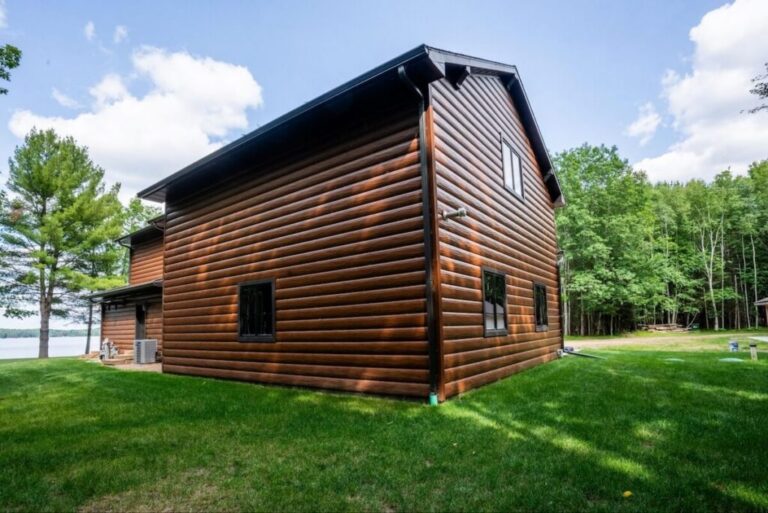
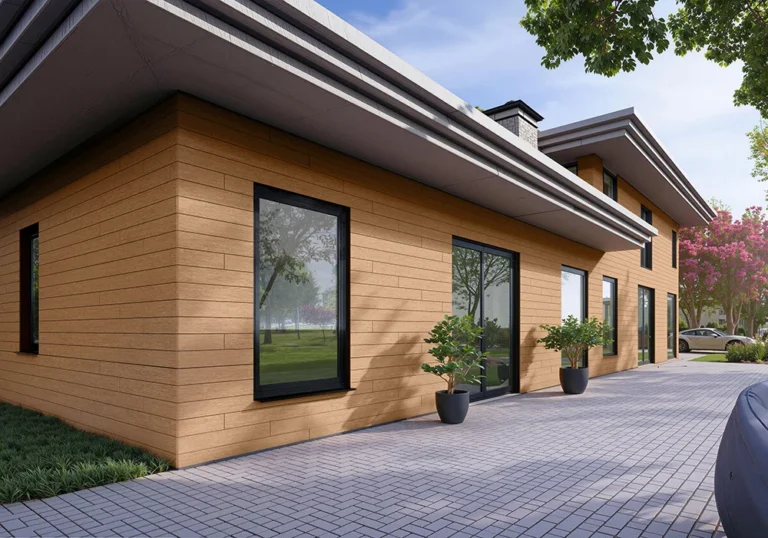
Deep cedar grain textures replicate traditional rough-sawn cedar boards, featuring varied grain lines and deep wood knothole impressions. This versatile texture conceals field cutting marks and structural framing flaws, making it a popular choice for traditional American home styles.
Smooth Sand-Blasted Contemporary Boards
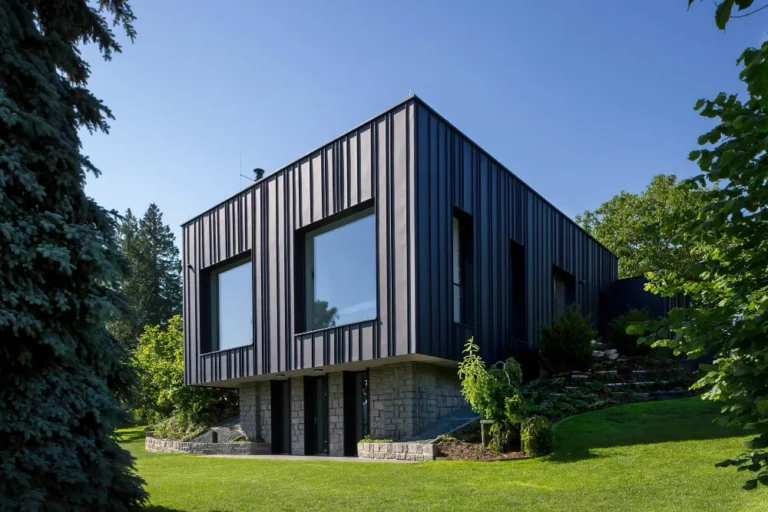
Smooth composite boards deliver crisp geometric lines required for modern, minimalist, and Scandinavian-inspired residential architecture. While offering sophisticated modern appeal, smooth surfaces show dirt streaks easily and require flat, well-aligned wall framing during installation.
Wire-Brushed Rough-Sawn Timber Finishes
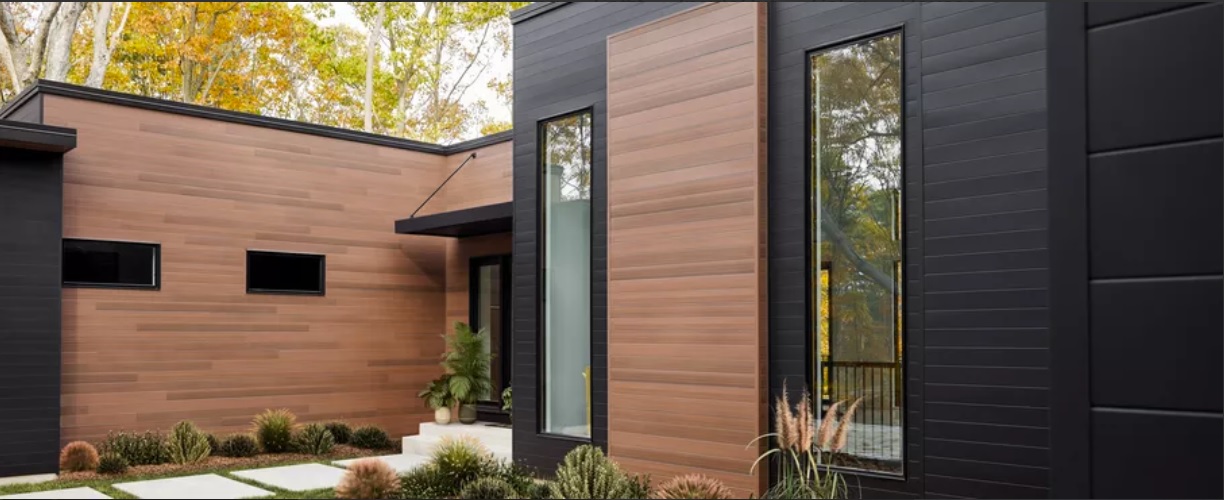
Wire-brushed finishes simulate heavy timber planks scrubbed with stiff wire wheels, leaving fine, linear surface grooves without deep knotholes. This subtle texture softens solar reflection while resisting heavy dirt entrapment in ambient dust environments.
Stucco and Sand-Finish Architectural Panels
Large-format composite panels with sand-finish or stucco textures provide the visual look of traditional hand-troweled plaster without cracking risks. These panels accelerate installation on multi-family buildings while providing clean, continuous masonry textures.
Hand-Split Shake and Shingle Castings
Composite shake panels replicate hand-split cedar shingles, featuring thick butt edges and deep vertical grain fissures. These textured panels create rich shadow lines that work exceptionally well on gables, accent walls, and rustic mountain homes.
Composite Texture Performance Comparison
| Composite Texture Class | Relief Depth Metric | Dirt Accumulation Risk | Solar Glare Dispersion | Recommended Style Match | Cleaning Complexity |
| Deep Cedar Grain | High ($1.2 – 2.0$ mm) | Moderate to High | High Dispersion | Craftsman, Colonial, Farmhouse | Low-Pressure Power Wash |
| Smooth Sand-Blasted | Minimal ($< 0.2$ mm) | Low (Streaking Risk) | Low Dispersion (High Glare) | Modern, Minimalist, Urban | Soft Sponge & Mild Detergent |
| Wire-Brushed Timber | Moderate ($0.4 – 0.8$ mm) | Low to Moderate | Moderate Dispersion | Transitional, Coastal, Ranch | Annual Hose Rinse |
| Stucco Sand-Finish | Low ($0.3 – 0.6$ mm) | Moderate | High Dispersion | Mediterranean, Southwestern | Soft-Bristle Brush Rinse |
| Hand-Split Shake | Very High ($2.5 – 5.0$ mm) | High | Maximum Dispersion | Rustic, Alpine, Cape Cod | Targeted Pressure Wash |
Strategic Decision Logic for Surface Texturing
Specify deep cedar grain or hand-split shake textures for heavily wooded sites where falling debris, minor scratches, and natural shadows blend seamlessly into forested backgrounds. Select wire-brushed or sand-finish textures for arid, dusty climate zones to prevent airborne dust from clogging deep board grooves. Utilize smooth composite boards for contemporary urban residences, ensuring wall sheathing is flat before panel installation.
Detailed Real-World Scenario Analyses Best Composite Siding Textures United States
Coastal High-Salt Fog Architectural Installations
A beachfront housing development installed deep cedar grain composite siding. Salt spray combined with fine coastal sand settled into the deep board grooves, creating crusty white deposits that required semi-annual soft-wash cleaning to restore original color tone.
Dense Forest Canopy High-Humidity Exposure
A mountain residence surrounded by oak trees selected hand-split shake composite panels. High ambient humidity and falling tree sap allowed dark green mildew to grow inside the deep vertical grain channels, requiring specialized zinc-based cleaner treatments.
High-Altitude Alpine Intense Solar Radiation
An alpine home at 8,000 feet elevation installed dark smooth composite boards. Intense high-altitude ultraviolet radiation caused high solar reflection, while extreme temperature swings exposed subtle board thermal movement at un-caulked butt joints.
Urban Modern Multi-Family High-Density Development
A modern multi-family building used smooth large-format fiber cement panels. The builder installed precision metal reveal channels between panels, producing clean geometric facade lines that matched surrounding commercial architecture.
Planning, Cost, and Resource Dynamics
Selecting the best composite siding textures united states suppliers offer requires balancing initial manufacturing costs against long-term wall maintenance budgets. Deeply embossed or hand-cast textures carry higher material procurement premiums due to complex mold tooling and specialized factory paint application processes.
Facade finishing expenses divide across material manufacturing premiums (25% to 35%), factory coating systems (20% to 30%), and long-term exterior cleaning requirements (35% to 50%).
| Composite Texture Category | Material Cost Premium | Factory Finish Option | 15-Year Maintenance Cost | Net Architectural Impact Value |
| Standard Smooth Board | Base Price Tier | Primer or Pre-Painted | $1,200 – $2,500 | Clean, Sleek Modern Visuals |
| Deep Cedar Grain | $+8\% \text{ to } +12\%$ | Factory Stain or Solid Color | $1,800 – $3,200 | Traditional High-Relief Character |
| Wire-Brushed Timber | $+10\% \text{ to } +15\%$ | Two-Tone Factory Finish | $1,500 – $2,800 | Balanced Subdued Elegance |
| Hand-Split Shake Panels | $+25\% \text{ to } +40\%$ | Multi-Tone Custom Stain | $2,500 – $4,500 | Maximum Premium Rustic Appeal |
Investing in factory-applied two-tone stains on deep grain profiles elevates home curb appeal while extending factory paint finish warranties up to 30 years.
Tools, Hardware, and Maintenance Support Systems
Maintaining textured composite cladding requires specialized cleaning tools, gentle detergents, and proper installation equipment.
Essential Maintenance Tools
-
Low-PSI Electric Pressure Washers: Cleaning equipment set below 1,500 PSI to wash textured boards safely without stripping factory paint coatings.
-
Soft-Bristle Telescoping Wash Brushes: Soft brushes designed to scrub organic dust out of deep grain channels without scratching underlying paint.
-
Non-Ionic Biodegradable House Washers: Cleaning solutions formulated to dissolve mold, tree sap, and atmospheric soot without harming garden landscaping.
-
Touch-Up Paint Applicators: Factory-supplied foam applicators used to seal field-cut board ends and cover minor installation scratches on textured faces.
Equipping maintenance crews with soft brushes and low-pressure sprayers preserves factory paint finishes while keeping board grooves free of organic dirt.
Risk Landscape and Structural Failure Modes
Deep Groove Water Retention and Freeze Thaw Damage
Water trapped inside deep texture valleys during freezing weather expands rapidly, causing micro-cracking along board grooves in lower-quality composite substrates.
Excessive High-Gloss Reflectivity and Distortion
Applying high-gloss paint over smooth composite boards creates harsh mirror-like reflections, amplifying minor surface waves caused by uneven wall stud framing.
Paint Film Separation on Deep Embossed Grooves
Excessive paint thickness pooled inside deep grain valleys dries slowly, forming brittle paint pockets that crack and peel away during seasonal thermal expansion.
Governance, Quality Control, and Surface Inspections
Ensuring consistent surface appearance requires rigorous jobsite quality control, proper material storage, and systematic elevation inspections.
Manufacturing Batch Consistency Verifications
Inspectors must verify that all delivered composite siding bundles share identical batch color numbers and texture mold runs before installation begins.
On-Site Lighting Direction Angle Checks
View installed siding courses under early morning and late afternoon sunlight to ensure texture grain patterns align consistently across adjacent wall elevations.
Long-Term Inspection Protocols and Maintenance Logs
Keep records of annual house washings, touch-up paint applications, and elevated inspection reports to maintain valid manufacturer warranty coverage.
Common Industry Misconceptions and Oversimplifications
“Deep Grain Textures Hide Poor Framing Completely”
While grain patterns soften minor wall waviness, deep textures cannot disguise severely bowed wall studs or misaligned vertical framing members.
“Smooth Composite Siding Never Requires Washing”
Smooth siding shows water runoff marks, rain streaks, and rain-splattered red clay dirt far more visibly than textured cedar grain profiles.
“All Embossed Wood Grain Patterns Look Identical”
Cheap siding features short 2-foot pattern repeats, whereas premium composite manufacturers use 8-foot multi-master molds that replicate natural timber variation.
Contextual, Sustainable, and Practical Considerations
Utilizing durable composite textures eliminates the need to harvest old-growth cedar trees, supporting sustainable forest management practices.
Long-lasting factory paint finishes applied over stable composite textures reduce liquid paint consumption and VOC chemical emissions over building lifespans.
Architectural Synthesis and Long-Term Surface Strategy
Selecting the best composite siding textures united states market options offer requires balancing architectural design goals with site-specific environmental conditions. Deep cedar grain provides timeless character, smooth boards deliver clean modern aesthetics, and wire-brushed finishes offer low-maintenance durability.
Evaluating local solar orientation, airborne dust levels, and cleaning access ensures chosen composite textures deliver exceptional curb appeal and long-term performance.